As an economic and social historian researching the evolution of technology, I am interested in one basic question – how and why does technology change?
I come to the question of why technologies alter or persist from a materials perspective. It was during my time at the LSE’s Department of Economic History, first with a Research Masters and then with the PhD programme, that my ideas about the materiality of technology and its various outputs became solidified under the guidance and support of my supervisors Professor Tirthankar Roy and Professor Joan Roses.
In my doctoral research, I looked at the issue of technological change through the lens of mechanisation in the early British cotton industry, guided by the imitation of the benchmark cotton products of the time – the Indian cotton textiles. I focus on understanding the diverse aspects of technological change and innovation that impact workers, businesses and economies.
In my postdoctoral work, I examined the relationship between knowledge transfer and technological change through the lens of the forgotten Indian technique of painting on cotton cloth with indigo, as well as through the historical reconstruction of the Indian chintz making process.
I have held the prestigious Economic History Society’s Postdoctoral Fellowship at the Victoria and Albert Museum in London, the Economic and Social Research Council’s Postdoctoral Fellowship at LSE and the Hallsworth Fellowship at The University of Manchester.
Download Poster
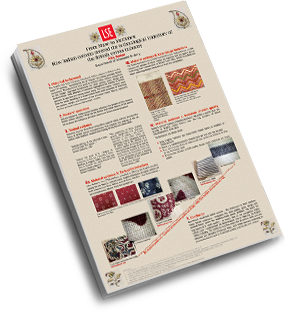
“From Muse to Machines: How Indian cottons steered the technological trajectory of the British cotton industry”